

How to Play Planarist
A quick introduction to the basics of the Planarist Trading Card Game, including basic rules and a components list.

Required
Main Deck
A primary deck, “The Materium” plane. 40-60 cards.

Damage and Ward Counters
Counters to track the health of creatures and if they have a magical ward shield or not.

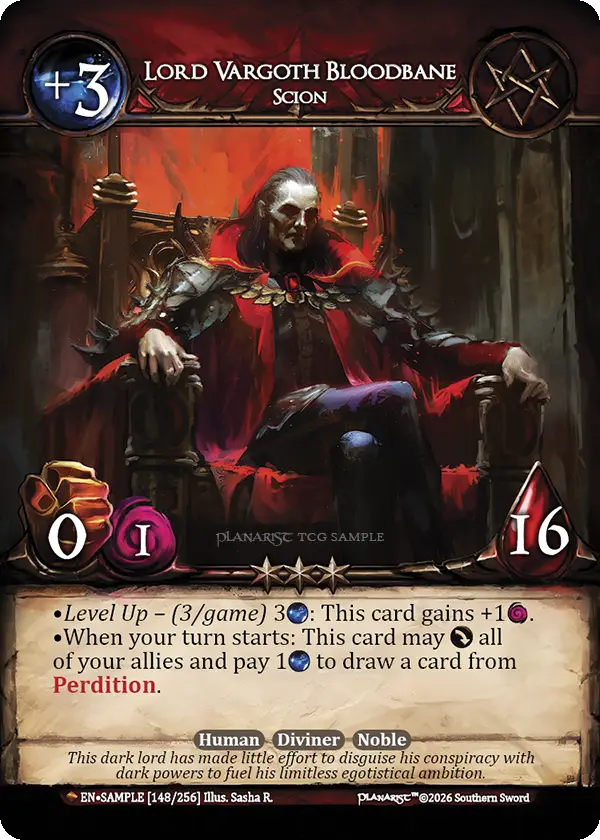
Your chosen leader of your forces. Your deck and scion should be chosen to compliment each other.
Scion Card
Optional

A few six sided dice.
Dice
Planar Decks

You only need planar decks if your main deck cards draw from them.
10 - 20 planar cards each
Setup
To set up a game of Planarist, each player places their shuffled main deck in the bottom right corner of their side of the board. They then place their selected Scion card above it. If they have planar decks, they are placed to the side of the main board, face down and shuffled. Any counters should be placed to the side for later use.
Each player then draws five cards and rolls a die to see who goes first based on the highest roll.
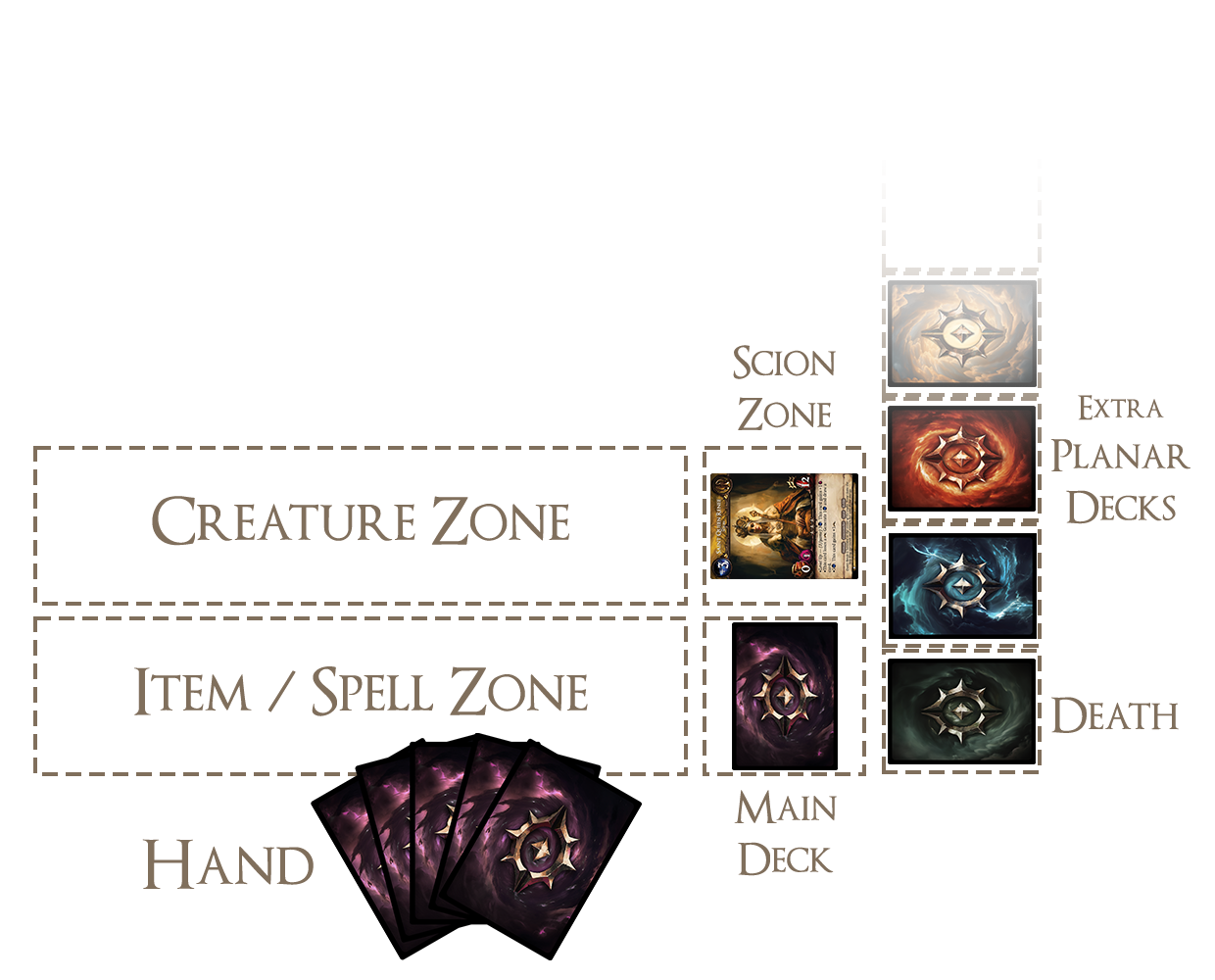
Example of a finished set up of Planarist, showing what a player’s board looks like.
Banishment to the Planes

Banishment is the act of sending cards from anywhere to the bottom of a planar deck. Mortal, non-planar cards are always sent to the plane of Death, face up, when banished from play. Planar cards, being immortal, return to the planar deck from whence they came face down, biding their time to make their return.
Start Phase
The first phase of the game is about resource management. In this order:
Draw - Draw 1 card.
Generate mana - Add mana to your stockpile equal to the total “Generate x mana” effects on your controlled cards. The scion card indicates this in the top left of its card.
Upkeep mana - Remove (pay) mana from your stockpile equal to the total “Upkeep: x mana” effects on your controlled cards.

The Scion’s mana generation each turn (top left corner)
Main Phase
The Main Phase is where all of the action of Planarist occurs. Any of the follow actions may be performed in any order.
The Player can:
Deploy a Creature
Set Spells
The Player’s creatures and scion can:
Summon Creatures
Cast Spells
Use Items
Attack
Activate Effects
Tapping
Note that most of the actions above are Creature/Scion actions. Planarist is a unit (creatures and scions) centric game. Some of these actions may require “tapping” the unit, changing its orientation. At most, units may be tapped twice to the “Exhausted” position.

Actions
Here is a full list of all actions that can be taken during a Main Phase in a turn of Planarist, both by the player and their minions.
Player Actions
Deploy a creature
(No taps) Once per turn, the player may place a creature that lacks summoning skill requirements from their hand to an open creature zone on their side of the board in an upright, “Ready” position.
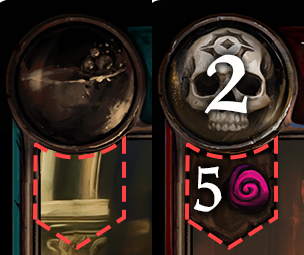
A deploy creature (left) has no skill banner in its corner, unlike a summon creature (right)
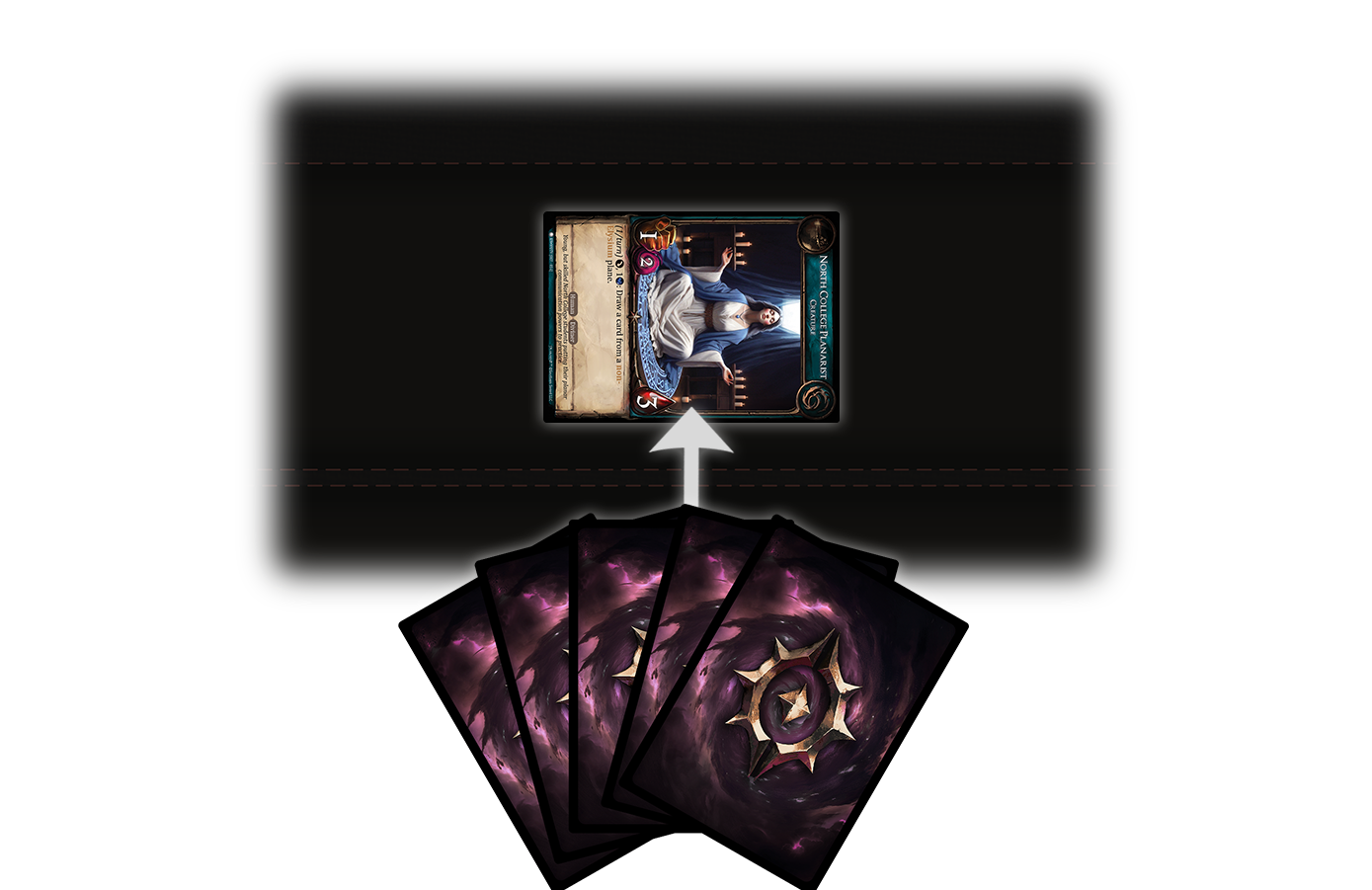
The North College Planarist creature is deployed.
Set spells
(No taps) By paying 1 mana, the player may place any spell card from their hand to an open spell/item zone on the board. This allows them cast that spell, with a skilled enough creature to cast it, during their opponent’s turn to disrupt a strategic play!

Creature / Scion Actions
Cast spells
(1 tap) A creature or scion may pay resources to cast a spell from the player’s hand. The required resources and skills are listed in the top left corner of the spell card.
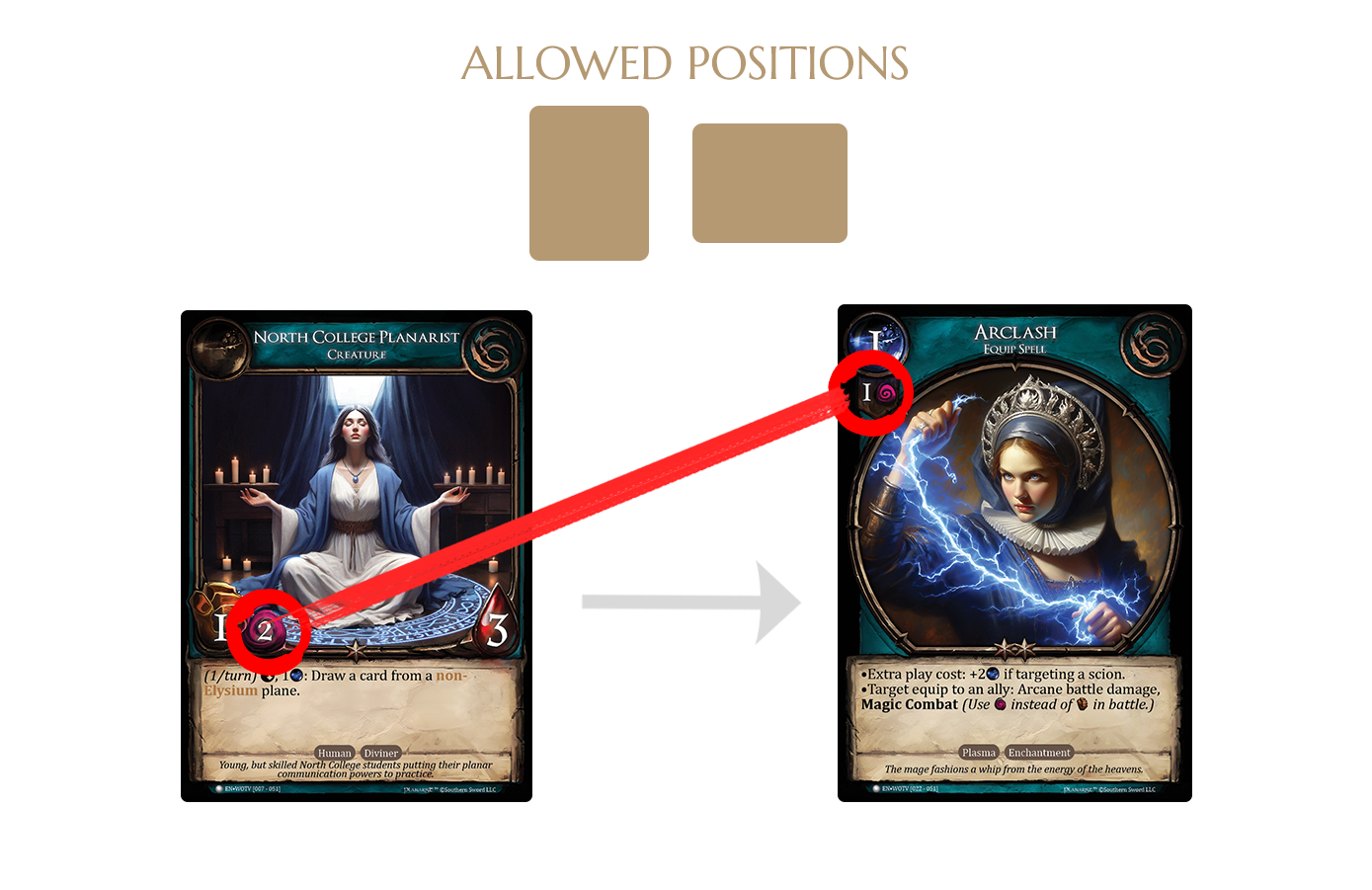
For 1 mana, the North College Planarist has enough magic (2) to cast Arclash, which requires a minimum of 1 magic.
Summon Creatures
(1 tap) A creature or scion with sufficient skill must pay the resources on summonable creature card in the player’s hand that matches the summoner’s aligned plane (its color). The summoned creature is placed on the board in the “Winded” position (1 tap).

For 1 mana, the North College Planarist has enough magic (2) to summon the Rift Sprite from the hand, which requires a minimum of 1.
Use Items
(1 tap) A single creature or scion with sufficient skill, may pay the resources on an item card in the player’s hand to use the item.

The North College Planarist taps to read a summoning scroll from hand.
(1 “ready” tap) Slay your foes with mighty attacks from a scion or creature with at least 1 combat point. Attacking takes focus and can only be done by cards that are “Ready” (upright). The player declares the attack by selecting an enemy creature or scion as the attack target.
The defender automatically counter attacks (0 taps), dealing their combat back to the attacker.
Attack

The North College Planarist attacks and deals 1 damage to the Novice Demon Caller, who deals 1 damage back. Both live to fight again in future turns.
Activate Effect
(? taps) A creature or scion with a special ability follows the instructions printed on its card to activate its special effect. These instructions may or may not require tapping, resources, or more.
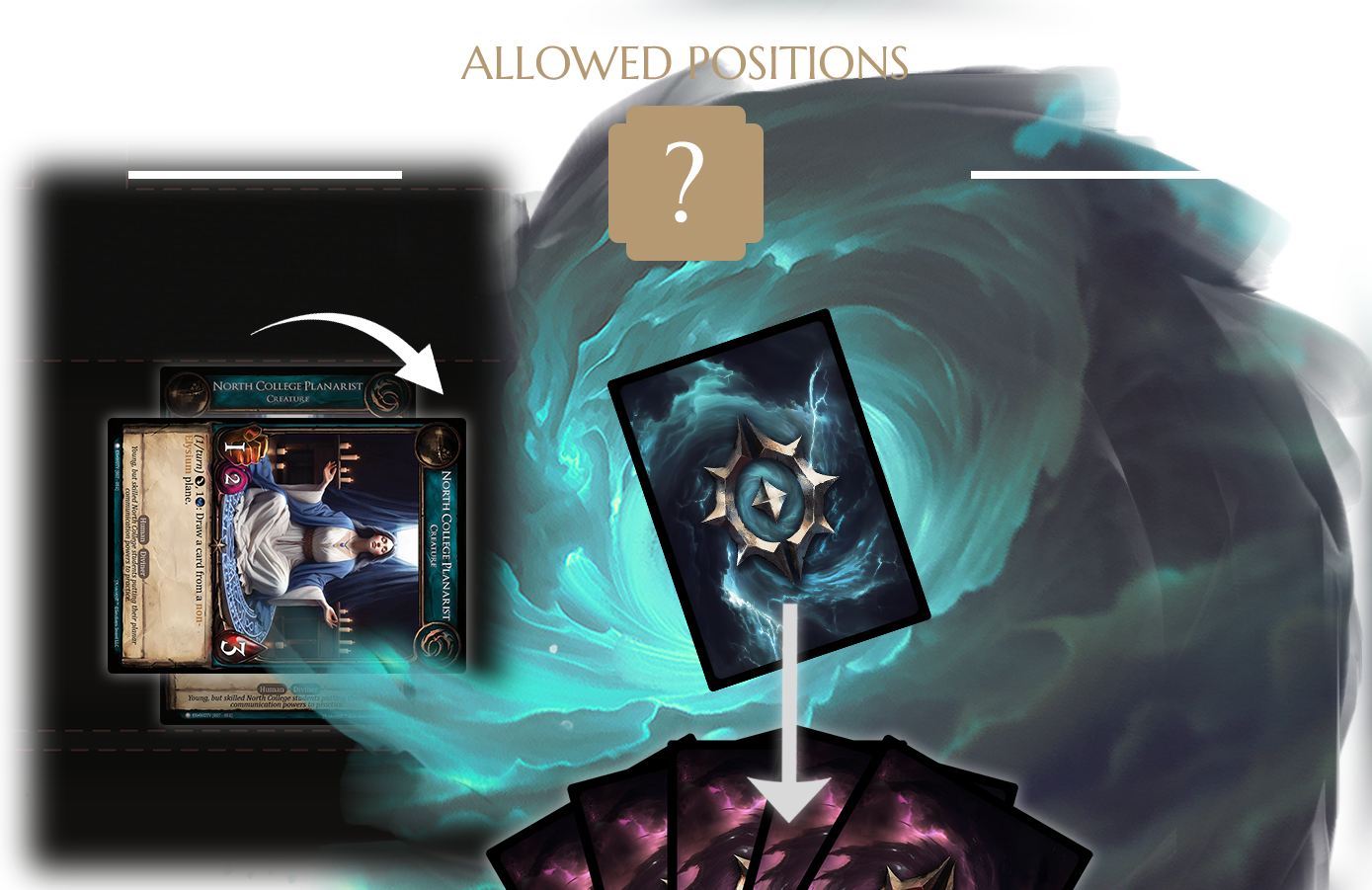
The North College Planarist taps once and pays a mana to draw a card from the maw of The Vortex.
Group Casting and Summoning
By tapping together, your creatures and scions can combine their skills to meet a spell or creature card’s skill requirement to play it. Note that items can only ever be played by a single creature or scion.
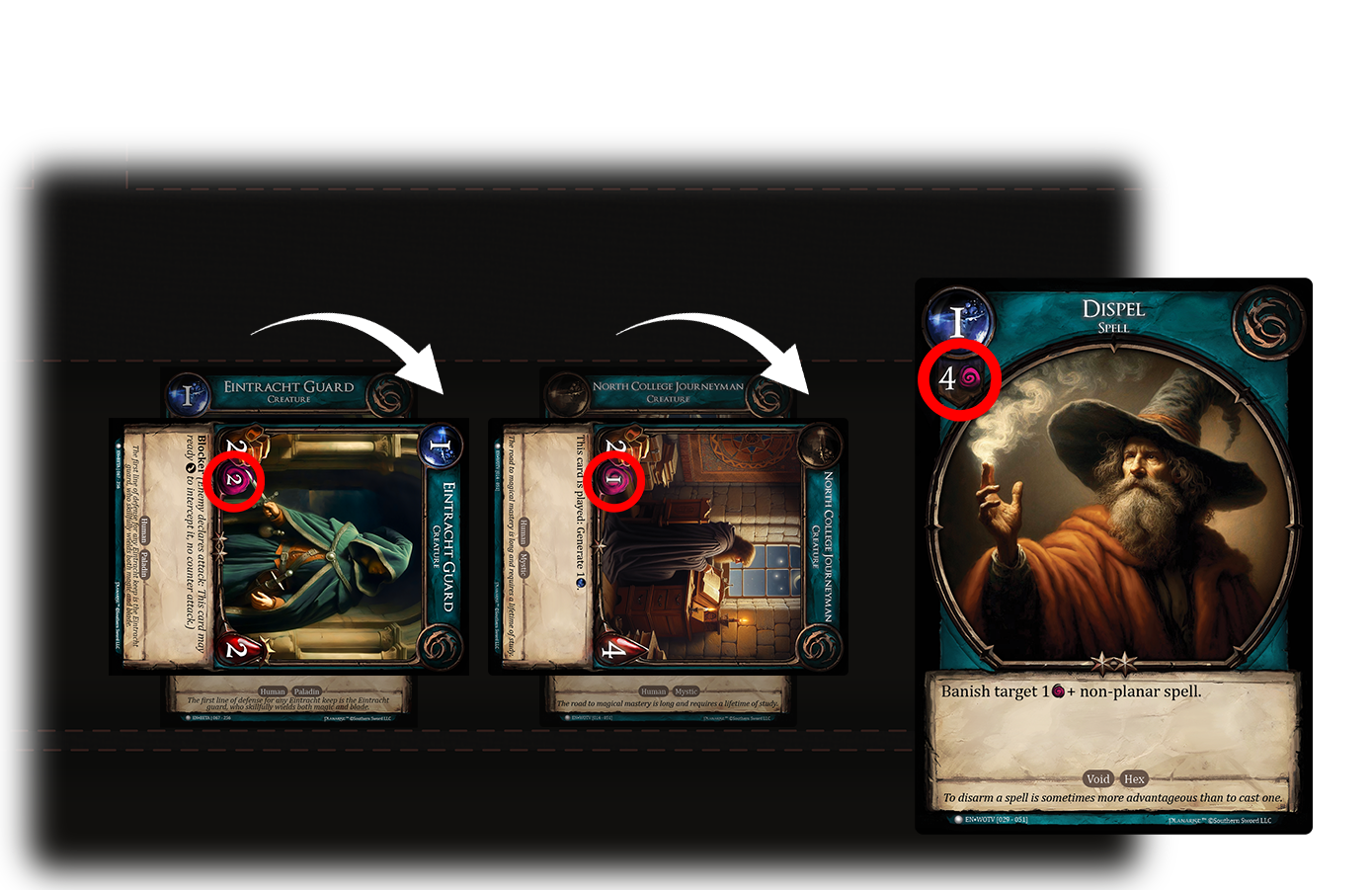
The two creatures add their magic stat of 2 together to reach a mighty 4 magic skill to cast the Dispel spell card.
End Phase
Once all desired actions have been taken, the player can move to the end phase. During the end phase, all tapped cards are fully “untapped” to the ready position, and then the opponent take their turn.
The first Scion to reach zero health loses the game.