
The Art of Planarist
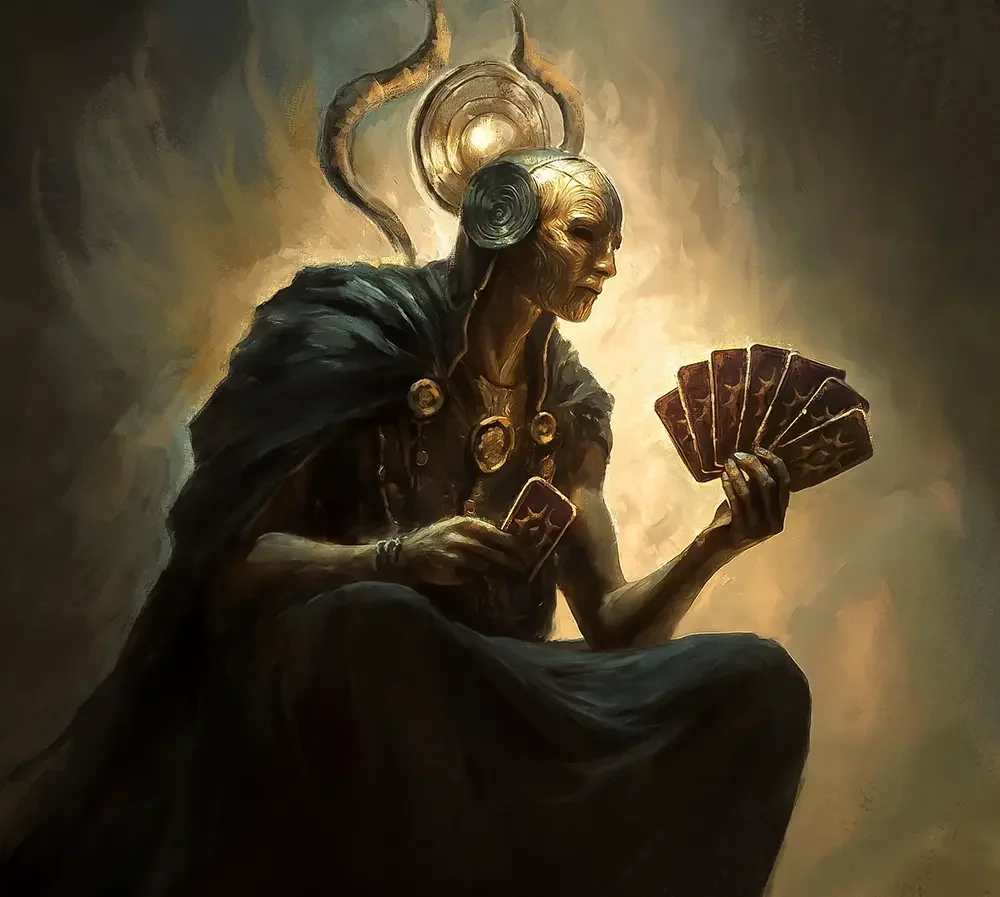
Planarist is painted by a team of classically trained, professionally seasoned illustrators and painters from around the world, all credited on every card they touch. Between them, they've worked for studios like Blizzard and Paradox, illustrated books and games, and trained at ateliers like Watts. Their brushwork is what gives the five Planes their look.
We believe great art deserves credit. This page introduces the artists behind Planarist, explains how a card goes from idea to print, and details what the method label at the bottom of each card means.
Meet the Artists
Sasa Radivojevic

Art Director
Sasa (or Sasha) is veteran artist from Serbia. His impressive portfolio includes works for Blizzard Entertainment, Paradox Interactive, and more. With Sasa’s help, Planarist was born. His contributions range from concept art, the beautiful card layouts, card backs, game logo, game board, and also a wide range of card arts leveraging all of the methodologies seen below. He also was a major contributor with game design and feedback. His professional eye and talent have surged the game into the spotlight of a professional quality trading card game.
Elena Krutenko

Lead Artist
Tbilisi, Georgia
From Tbilisi, Georgia, Elena Krutenko is another talented artist. Elena’s large number of impressive contributions has been critical to Planarist’s artistic success. Not only has she been a top card art contributor, but she also did the art for the token sheet as well as much of the holographic masking work.
Valeriia Stetsenko
Lead Card Artist
Lviv, Ukraine
Valeriia is a freelance artist who has experience illustrating books, games, and custom characters. With her strong discipline and talent she has completed a large number of beautiful card artworks for Planarist.
Makenna Karp

Starter Deck Box Artist
Arcata, California, United States
Makenna is a skilled, classically trained painter. Trained at the Pratt Institute and later the Watts Atelier, Makenna has been featured in multiple publications for her magical visual style. Makenna graced the project with her gorgeous original paintings for the first three starter decks of the game.
Geraldo Prado
Card Artist
Taubate, Brazil
Geraldo was trained in illustration at Black Fox Studios. From there, he was worked a number of gaming related projects. He contributed several of the card artworks for Planarist, most notably the time spells.
Zayane

Card Artist
France
A traditionally trained artist, Zayane studied art for three years at Watts Atelier, which was certified as one of the top five ateliers in the world by the Art Renewal Center in 2019.
Tereza Abgaryan

Card Artist
Yerevan, Armenia
Tereza boasts a broad range of artistic skills from graphic design to original illustration. She led art direction for a number of games from mobile games to board games.
Karolina Ostapenko

Card Artist
Krivoy Rog, Ukraine
Karolina is a fully time 2D freelance artist with 10 years of experience. She has contributed to many projects from mobile to physical games. She has an open mind to all kinds of potential projects, but particularly loves ones based in realism.
Ilonia Buitova

Holographic Masking Artist
Kharkiv, Ukraine
A graphic designer with 15 years of experience, Ilonia excels in graphic and creative design. With her help, Planarist got a large number of its holographic card masks done.
Gamze Derinoz
Graphic Designer
London, England
A business owner and highly experienced graphic designer, Gamze was the graphic designer for the printed instruction booklet included with every Planarist starter deck. She has a larger international presence and is highly experienced with game and UX graphic design projects.
How Our Art is Made
Every card starts with a brief from the studio: the Plane, the creature, the moment we want on the card. For many pieces, we also build a reference comp: a rough of composition, lighting, and mood assembled from photo reference, our own concept work, and image generation, then cleaned up in Photoshop by our graphic designer. That comp goes to the artist the way a sketch would, and the artist paints the final piece. What ends up on the card is their painting.
Each card credits its lead artist and the method used in bottom left corner, so you always know whose work you're holding and how it was made. The three labels describe how much of the composition is the artist's own and how much came from the studio's reference. If more than one artist contributes to a piece, the lead artist receives credit.
The Method Labels
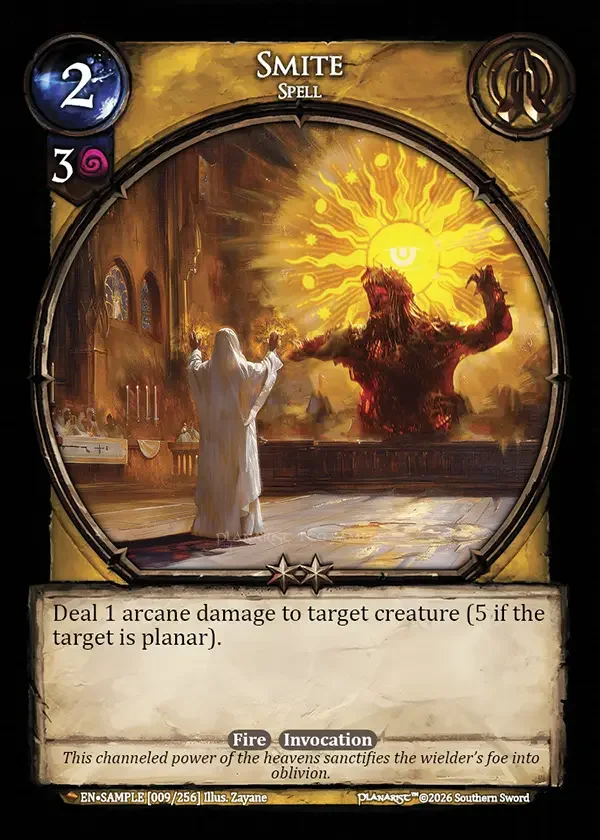
The artist's own piece, composed and painted by them from first sketch to final render.
Illustration (Illus.)
Smite is an original illustration from the mind of the artist without any reference image.
The artist keeps some of the reference's structure and paints the rest from their own imagination: a new background behind a repainted subject, or a new subject in a repainted scene.
Hybrid (Hybr.)
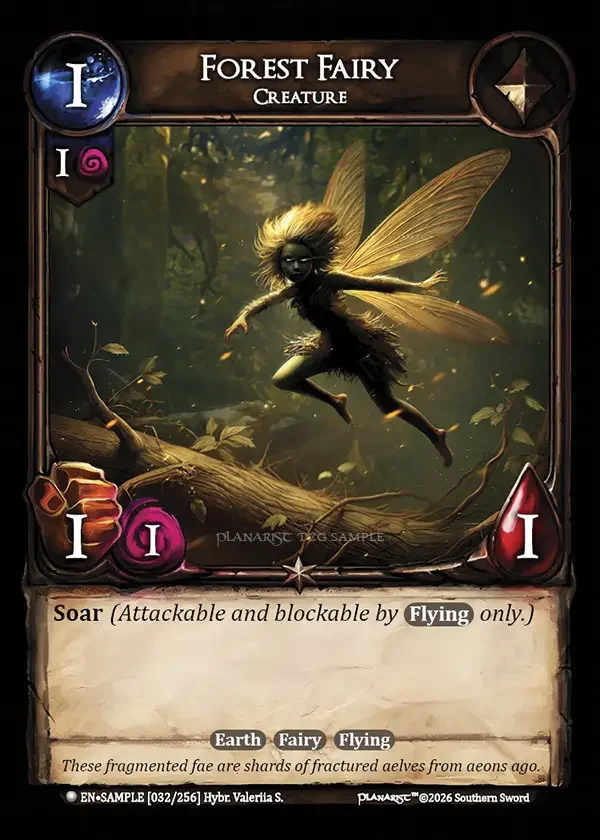
Forest Fairy’s subject was painted following a reference image, combined with a from scratch background.
The studio composes the piece and the artist paints it. Layout, lighting, and mood come from our reference comp, and the artist paints the finished card from it at print resolution, in their own hand.
Composite (Comp.)
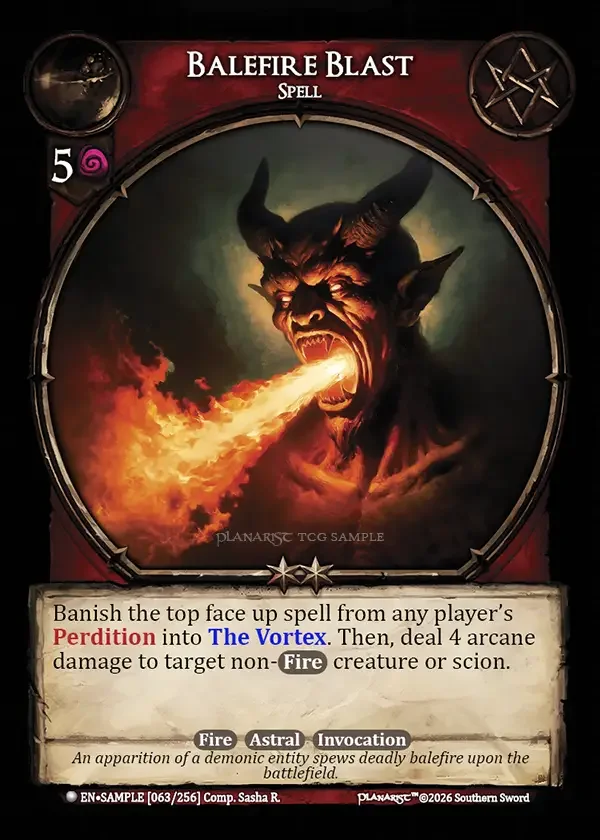
Balefire Blast sticks closely to the graphic designer’s reference image.
If you have questions about the artwork or the process, feel free to reach out. We are always happy to talk about how Planarist is made.